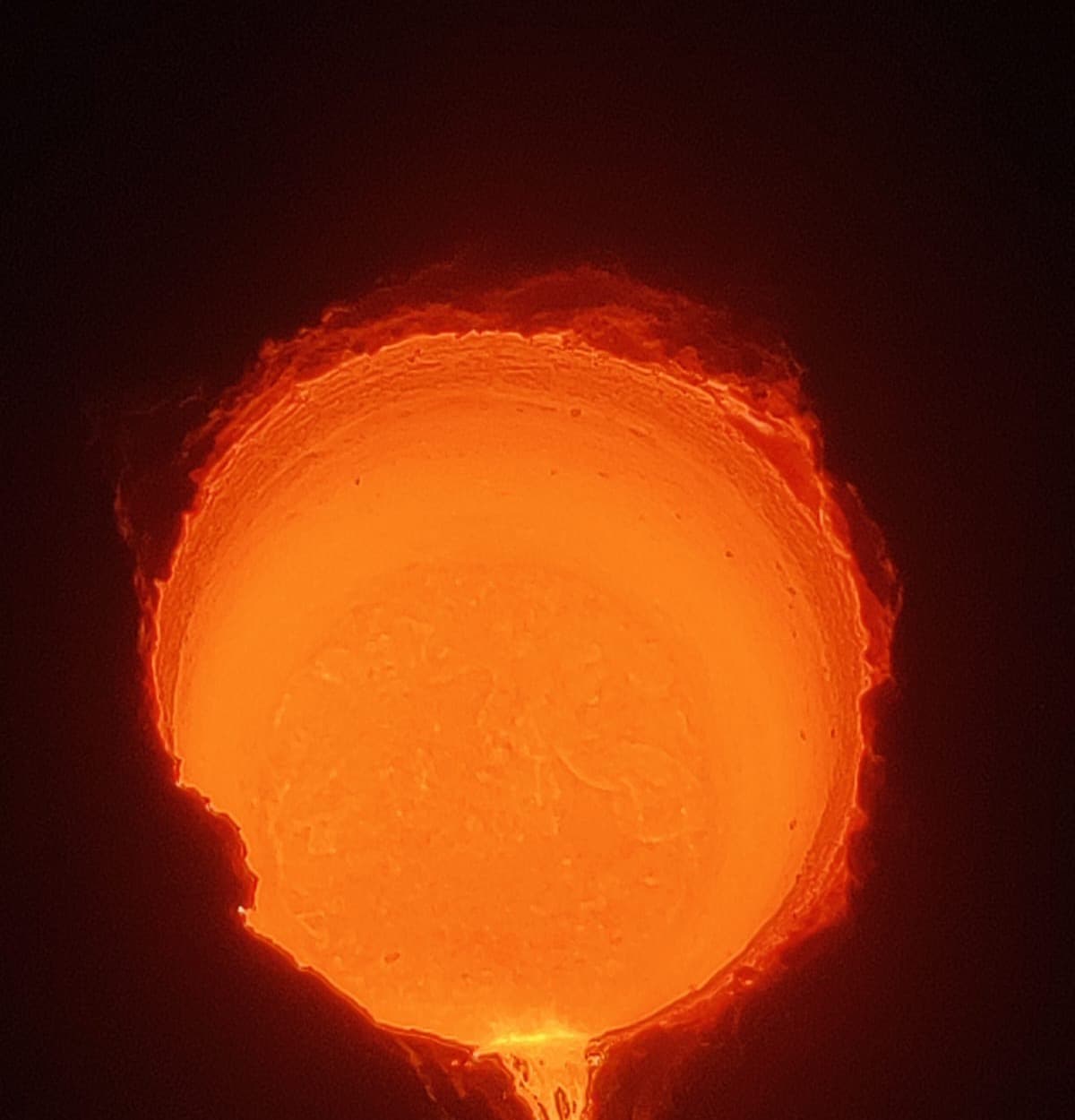
Lukorma
Neutral Ramming Mass
Lukorma — DFP India's specialist alumina-spinel neutral ramming mass for high-temperature special-alloy and alloy-steel melting.
Neutral ramming mass — such as DFP India's Lukorma alumina-spinel lining — is the preferred refractory for induction furnaces prone to corundum and slag buildup. Because it is chemically neutral, it does not react with acidic or basic slags, unlike silica linings, which can be attacked by aggressive or contaminated scrap. This reduces lining erosion, lowers patching frequency by up to 60%, and extends campaign life to 160–250 hours depending on furnace size and metal grade.
Our specialist product line
Lukorma — proven with India's special-alloy and alloy-steel melters.
Lukorma is DFP India's dedicated neutral ramming mass, and it is what we specialise in. We supply it to a wide base of high-temperature special-alloy and alloy-steel melting customers who need a lining that holds up where ordinary silica and generic local masses fail. The result is more consistent campaigns, fewer interruptions and better overall productivity — not simply a lower price per kilo.
Performance & consumption data
25 T · Mild Steel
160–170 hrs/campaign
Lining life
2 kg / ton
Consumption
45 T · Stainless Steel
200–250 hrs/campaign
Lining life
as low as 1.9 kg / ton
Consumption
15 T · Alloy Steel
180–220 hrs/campaign
Lining life
2.5–3 kg / ton
Consumption
6.5 T (Vacuum) · Special Alloy Steel
180–220 hrs/campaign
Lining life
2.5–3 kg / ton
Consumption
What Lukorma is made of
Lukorma is an alumina-spinel forming neutral ramming mass, built from a few key oxides:
Major components
Al₂O₃
Aluminium oxide
MgO
Magnesium oxide
Present in smaller amounts
SiO₂
Silica
CaO
Calcium oxide
Fe₂O₃
Iron oxide
What is Spinel Formation?
During firing, the aluminium oxide (Al₂O₃) and magnesium oxide (MgO) react to form spinel (MgAl₂O₄) — the bond that gives Lukorma its resistance to thermal shock and slag penetration.
Liquid & electric sintering
Lukorma neutral ramming mass is sintered using liquid-sintering technology — the process Dörentrup pioneered — and is also sintered using an electric sintering process by many Mini Steel Plants.
Technical specifications
| Product | Al₂O₃ | MgO | SiO₂ | CaO | Fe₂O₃ | Bond | Bulk density | Max service temp |
|---|---|---|---|---|---|---|---|---|
| Lukorma | 86% | 12% | < 0.1% | 0.1% | 0.1% | Ceramic | 2.9–3.0 t/m³ | 1800 °C |
Case in point
Eliminating corundum buildup and maximizing campaign life in coreless induction furnaces
At GIFA 2023, field data was presented from a 25-ton coreless induction furnace melting mild steel, lined with Lukorma neutral ramming mass: 160–170 hours of campaign life, at a consumption of just 2 kg of lining material per tonne of liquid metal produced.
Competitive edge vs. generic / local
- Up to 60% fewer patch repairs per campaign than conventional silica-based local masses, cutting labor and turnaround time at every reline.
- Chemical neutrality means no lining redesign risk when scrap quality varies — generic acidic/silica masses degrade faster with contaminated or high-DRI charges.
- Consistent German-formulated grain distribution reduces segregation during ramming, versus inconsistent grain sizing common in unbranded local mass batches.
- Fewer relines per year directly lowers total refractory spend per tonne of liquid metal — even though per-kg price is higher than commodity local mass.
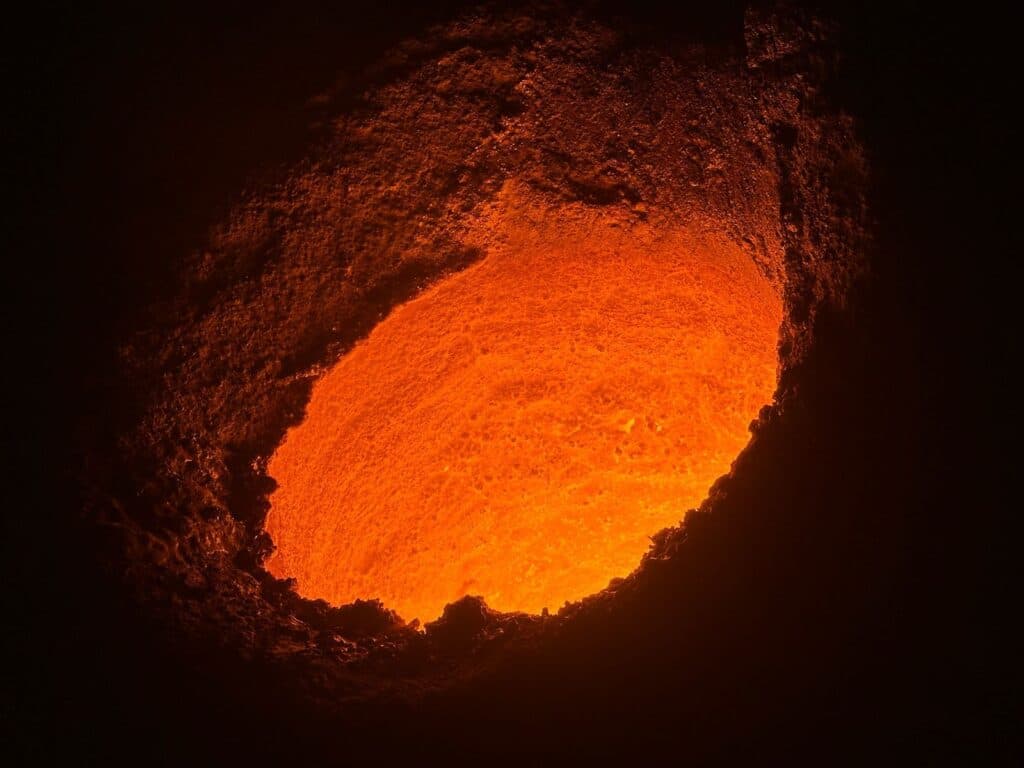
What changes when you switch
| Aspect | Silica ramming mass | Lukorma neutral ramming mass |
|---|---|---|
| Scrap compatibility | Reacts with acidic/basic slag, degrades fast with contaminated scrap | Chemically neutral — handles high-corrosion scrap, up to 90% DRI |
| Patch repairs | Frequent patching every campaign | Cut by up to 60% |
| Furnace uptime | More sintering cycles, more downtime | Fewer cycles, longer campaigns |
| Cost per tonne of metal | Higher — frequent relining offsets lower per-kg price | Lower total cost despite higher per-kg price |
Frequently asked questions
How long does Lukorma last in an induction furnace?
160–170 hrs in a 25-ton mild steel furnace, up to 200–250 hrs in a 45-ton stainless steel furnace.
Is neutral ramming mass better than silica?
For variable or contaminated scrap, yes: it doesn't react with slag, avoiding the rapid erosion silica suffers, and cuts patch-work up to 60%.
Can it handle high-DRI charges?
Yes, up to 90% sponge iron in the charge mix, with fewer inclusions in the final melt.
What furnace sizes is it available for?
From 100 kg furnaces up to 50-ton coreless induction furnaces.
Who uses Lukorma?
Lukorma's customers include manufacturers of alloy steel, special-grade alloys, mild steel and manganese steel.
What is alumina-spinel ramming mass?
A neutral refractory where 12% magnesia forms spinel (MgAl₂O₄) with alumina during firing, giving resistance to thermal shock and slag penetration, with an 1800°C service limit.
What is the consumption rate of Lukorma per tonne?
As low as 1.9 kg per tonne of liquid metal in a 45-ton stainless steel furnace, around 2 kg/ton for 25-ton mild steel.