Doricast RC · Doriflow MC
Coil Grout Material
The safest material in the induction coil.
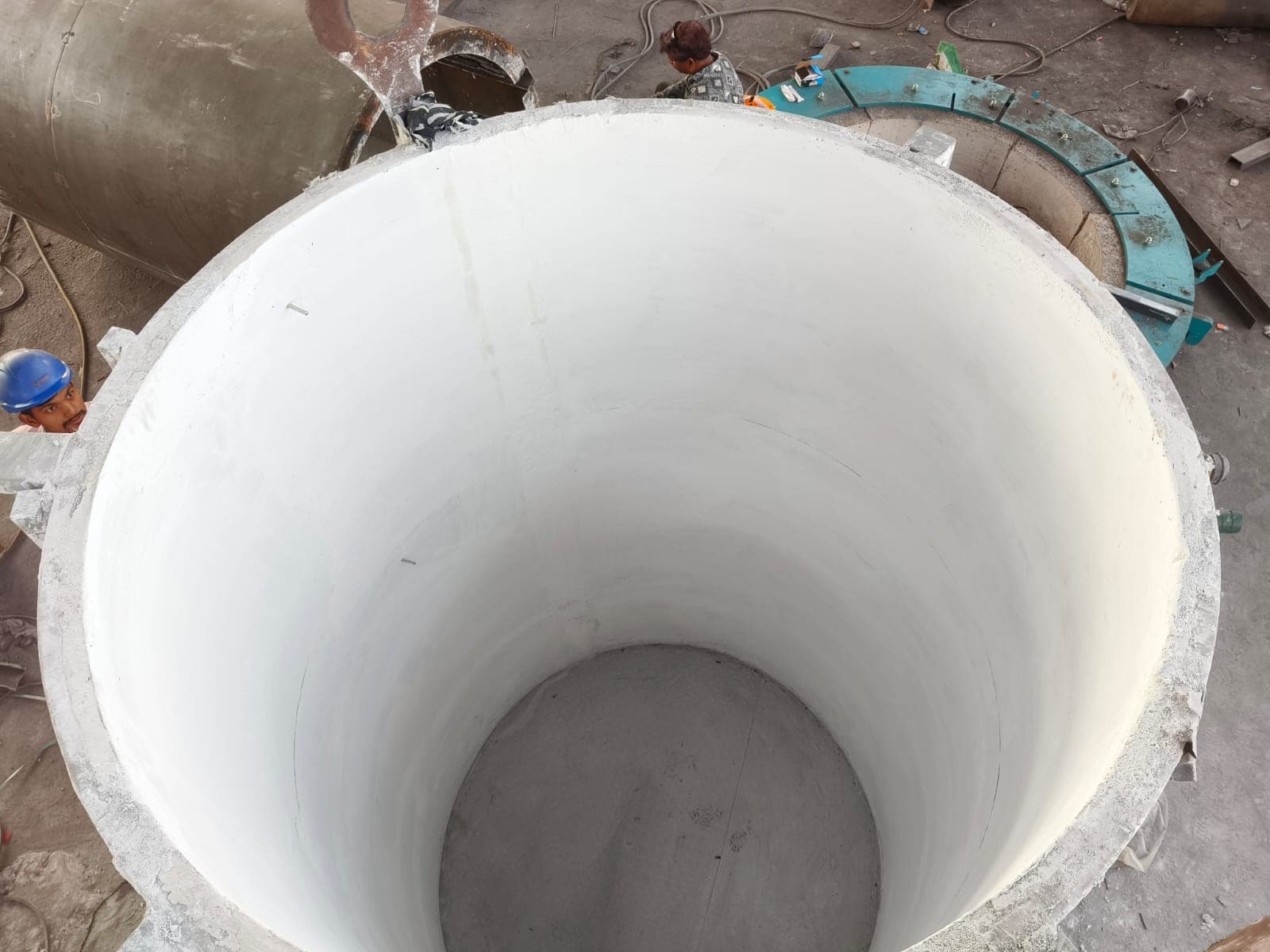
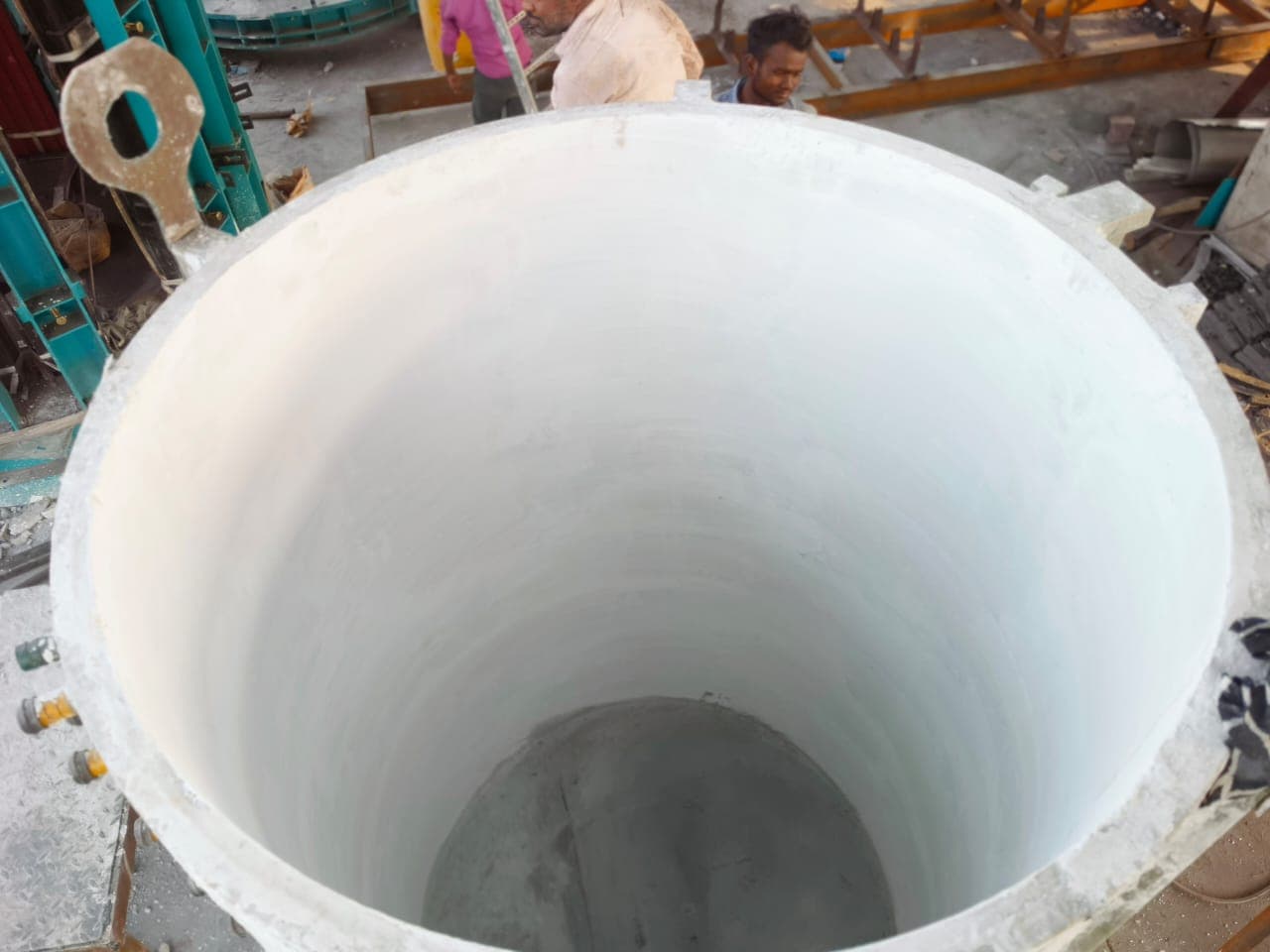
Pictured: Doriflow MC coil grout — for furnace sizes above 15 tons
Coil grout is the layer between the induction coil and the furnace's hot-face working lining — the silica or neutral ramming mass that contacts the molten metal — so a failure here risks coil damage and unplanned downtime, not just relining cost. DFP India's Doricast RC 1750 / Doriflow MC 1750 is built from 95% alumina with only 0.4% Fe₂O₃, giving a 1750°C service temperature and a cold crushing strength of 200 N/mm² at that temperature — and 8–12 months of life under high-power operation.
Performance & consumption data
Doricast RC 1750 / Doriflow MC 1750
Coil
Application area
5–50 tons
Furnace capacity
1750°C · 200 N/mm²
Service temp / CCS
High power 8–12 mo · Low power 12–24 mo
Life
Doricast RC 1652 / DF Heat LC 90 / DoriVib ULC 1800
Furnace spout & top block
Application area
4–6 months
Life
Case in point
Preventing coil damage and furnace downtime with high-alumina coil grout
Furnaces running Doricast RC 1750 / Doriflow MC 1750 at high power see 8–12 months of coil grout life — close to double the 4–6 months typical of the lower-spec grout used at spouts and top blocks — at a sustained 1750°C and 200 N/mm² cold crushing strength.
Competitive edge vs. generic / local
- 95% alumina purity with iron oxide held to just 0.4% reduces the risk of localized hot spots that lower-purity local grouts are prone to under high-voltage operation.
- 200 N/mm² CCS at full 1750°C service temperature means the grout retains structural strength exactly when thermal stress is highest — generic grouts typically lose strength well before this threshold.
- Self-flowing application reduces void formation around the coil during installation, a common cause of premature coil grout cracking with hand-packed local alternatives.
- Longer service life at high power (8–12 months) reduces the frequency of the highest-risk maintenance event on an induction furnace — coil exposure during grout replacement.
What changes when you switch
| Aspect | Generic coil grout | Doricast RC 1750 / Doriflow MC 1750 |
|---|---|---|
| Alumina purity | Purity depends on their raw material and type of alumina — variable | 95% alumina, just 0.4% Fe₂O₃ |
| Service temp / CCS | Typically lower, undocumented | 1750°C at 200 N/mm² CCS |
| Application | Only hand technique — skill-dependent mason work, prone to porosity | Hand trowelling and former technique — dense, uniform coat with fewer voids |
| High-power life | Shorter, more frequent coil exposure | 8–12 months at high power |
Frequently asked questions
What temperature can DFP's coil grout withstand?
1750°C with a CCS of 200 N/mm² at that temperature.
How long does coil grout last in a high-power furnace?
8–12 months at high power, 12–24 months at low power, depending on voltage and duty cycle.
Why does alumina purity matter in coil grout?
Higher alumina (95%) with minimal iron oxide (0.4%) reduces localized hot spots that lower-purity grout is prone to under high-voltage operation.
Why does iron (Fe₂O₃) content matter in coil grout?
A low iron-oxide content means less coil turn-to-turn sparking and helps prevent carbonization under the high-voltage coil. That is why DFP's Doricast holds Fe₂O₃ to just 0.4% — higher iron content raises the risk of sparking between coil turns and of carbonization.
What is coil grout and why is it important?
Coil grout sits between the induction coil and the furnace's hot-face working lining — the silica or neutral ramming mass that actually contacts the molten metal. It protects and insulates the coil, so a failure risks coil damage and unplanned downtime, not just relining cost.
What alumina purity should coil grout have?
DFP's Doricast is 95% alumina with only 0.4% Fe₂O₃, reducing localized hot spots that lower-purity grouts are prone to under high voltage.